5 Hidden Features of the The Frame 2018 You Must Know About
When Samsung first introduced The Frame, it represented a paradigm shift in how we perceive consumer electronics within the home environment. No longer was the television a monolithic black rectangle that dominated the living room aesthetics when powered off. Instead, it became a chameleon—a piece of sophisticated decor that could display world-class art with startling realism. However, as the 2018 iteration of The Frame (internally known as the LS03N series) matured in the market, many owners realized that its beauty was more than skin deep. While the Art Mode remains the primary selling point, there are several layered features and technical nuances that distinguish this specific model year from both its predecessor and its successors.
For the modern homeowner, the 2018 model struck a specific balance between the early experimental phase of the 2017 original and the later transitions to QLED technology. It utilized a refined UHD panel that, while technically replaced in newer lineups, offers a specific color profile and matte-like finishing that many enthusiasts still prefer for its convincing "paper-like" quality when displaying sketches and oil paintings. Understanding these hidden features is essential for getting the most out of this investment, ensuring that the device serves as both a high-performance entertainment hub and a seamless element of interior design.
Detailed Product Analysis: The Dual Persona of the LS03N
The Frame 2018 was built on the foundation of Samsung's refined 4K UHD engine. Unlike standard sets, the hardware here is split between the display panel itself and the One Connect Box. This externalized brain is what allows the TV to sit flush against the wall using the proprietary No Gap Wall Mount. The display utilizes an edge-lit LED system with Supreme UHD Dimming. While it may not reach the blinding peak brightness levels of newer Neo-QLED models, it excels in the subtlety required for Art Mode. The 2018 model also notably improved the motion handling over the first generation, offering a 120Hz native refresh rate on larger sizes which made it a sleeper hit for sports fans who wanted a TV that didn't look like a sports bar fixture.
The build quality is substantial. The interchangeable bezels—available in walnut, beige wood, white, and black—attach via magnets, a design choice that is remarkably simple yet effective. The software experience is powered by Tizen, which in 2018 received a significant update to include better integration with smart home ecosystems like SmartThngs and initial support for Bixby, though many users found the most value in the expanded Art Store. This store serves as the backbone of the device's secondary persona, offering access to curated collections from the Albertina, the Prado, and the Berlin State Museums. But beyond these obvious traits lie the features that truly define the ownership experience.
1. Advanced Ambient Light Sensing and Color Calibration
One of the most overlooked features of the 2018 Frame is the sophistication of its ambient light sensor. Most TVs use a basic sensor to adjust brightness to save energy. The Frame 2018, however, uses an "Intelligent Sensor" specifically calibrated to match the color temperature of the room. If your living room is bathed in the warm, orange glow of a sunset, the TV will shift the white balance of the displayed art to a warmer hue. If you turn on cool-white LED overhead lights, the screen adjusts to a bluer tint. This is why the art looks like a physical canvas rather than a backlit screen. Users often miss the ability to fine-tune this sensor within the settings, allowing them to set a baseline "offset" so the TV doesn't get too dark or too bright for their specific room lighting conditions.
2. The "Invisible Connection" Power Delivery
The 2018 model was the first to truly perfect the "Invisible Connection" cable. In the original 2017 version, you still needed a separate power cable and a fiber optic cable. The 2018 iteration moved to a single, near-transparent 5-meter cable that carries both the heavy power load and all data signals. This is a feat of engineering that many buyers don't fully appreciate until they try to install a television over a fireplace or on a feature wall. This single cable allows for a cleaner installation without the need for complex in-wall power bridges or professional electrical rerouting, provided the user follows local fire codes regarding low-voltage cables in walls.
Find top-rated TVs & Home Theater products at great prices.
View Offers →3. Customizable Matte Layouts and Depth Effects
In Art Mode, the 2018 Frame offers several matte styles including "Modern," "Shadow Box," and "Triptych." What is "hidden" to many is the level of customization available within these. You aren't just picking a border; you are picking the visual depth. The "Shadow Box" effect uses the TV's processing power to create a simulated drop shadow on the digital matte, making the art appear as though it is recessed behind a real piece of cardboard mount. Furthermore, the 2018 software allows for the adjustment of matte colors to perfectly complement the furniture in your home, going far beyond standard white or cream options.
4. Motion Sensitivty and Power Management Handoffs
The Frame 2018 is equipped with a motion sensor designed to turn the TV off when the room is empty and turn it back on when someone enters. However, the hidden feature here is the "Sensitivity Sensitivity." Most users leave it on the default, but if you have pets or a room with heavy curtains that move in the breeze, the sensor can be adjusted. More importantly, there is a "Sleep Mode" hidden in the Art Mode settings that allows the TV to stay on a timer regardless of motion. This is vital for those who want the art to be visible from the street at night for curb appeal, even if no one is in the room to trigger the motion sensor.
5. High Dynamic Range (HDR10+) Integration for Cinema
While marketed as an art piece, the 2018 Frame was one of the early adopters of HDR10+. While standard HDR10 is static, HDR10+ uses dynamic metadata to adjust brightness levels on a frame-by-frame basis. This is particularly noticeable in the 2018 model's performance with dark scenes in movies. Because the panel was higher quality than the standard NU-series Samsung TVs of that era, the HDR implementation was surprisingly robust. For the buyer who wants to watch a moody thriller on Netflix after dinner, this hidden technical spec ensures that they aren't sacrificing contrast for aesthetics.
Pros and Cons of The Frame 2018
- Pro: Unique Aesthetics - No other television in 2018 offered the same level of integration with home decor, essentially eliminating the "black hole" effect in a room.
- Pro: The One Invisible Connection - Simplifies installation dramatically by combining power and AV signals into one thin, clear cord.
- Pro: Art Store Selection - Access to thousands of high-resolution digital masterpieces from world-renowned galleries with professional curation.
- Pro: Matte Screen Finish - The specific coating on the 2018 panel is highly effective at diffusing reflections, which is crucial for viewing art in bright rooms.
- Con: Edge-Lit Limitations - Because it is edge-lit, it cannot achieve the deep blacks found in OLED TVs or the localized precision of Full Array Local Dimming (FALD) sets.
- Con: Power Consumption in Art Mode - While lower than full TV mode, keeping Art Mode on for 12-16 hours a day does contribute to a higher electricity bill compared to a TV that is simply off.
- Con: Viewing Angles - The VA panel used in the 2018 model offers great contrast but the colors can wash out slightly when viewed from a sharp side angle.
Comparison: The Frame 2018 vs. Standard UHD TVs
To understand the value proposition of The Frame 2018, it is helpful to compare it against a standard premium UHD TV from the same era, such as the Samsung NU8000 series.
| Feature | The Frame 2018 (LS03N) | Standard Premium UHD (NU8000) |
|---|---|---|
| Mounting System | No Gap Wall Mount Included | Standard VESA Mount (Leaves Gap) |
| Cable Management | One Invisible Connection (All-in-one) | Separate Power and Multiple HDMI Cables |
| Special Modes | Art Mode with Motion/Light Sensors | Ambient Mode (Basic Graphics) |
| Finish | Matte / Semi-Gloss Anti-Reflective | Glossy / High Reflective |
| Customization | Interchangeable Magnetic Bezels | Fixed Plastic or Metal Frame |
Buying Guide: Is The Frame 2018 Still a Good Buy?
In the current market, the 2018 Frame is an interesting choice for those looking at the secondary market or refurbished stock. Buyers typically care about three things: Does it still look like art? Is the smart TV platform still supported? And how does it handle modern consoles? The 2018 model still excels at the first point. Its panel is arguably more "organic" looking for art than some of the hyper-bright QLED versions that followed. For the second point, Samsung has been relatively good at keeping the Tizen OS updated for the 2018 models, with major apps like Netflix, Disney+, and YouTube still functioning perfectly.
When considering this model, you should pay close attention to the size. The 43-inch model was a popular choice for bedrooms and offices, while the 55-inch and 65-inch models served as primary living room displays. One thing to note for gamers: while the 2018 Frame supports 4K and has low input lag, it lacks the HDMI 2.1 features found in newer TVs, such as 4K at 120Hz for the latest consoles. If your primary goal is high-end gaming, you might look elsewhere. However, if your goal is to have a sophisticated living room where the tech disappears when not in use, the 2018 Frame remains a gold standard.
Find top-rated TVs & Home Theater products at great prices.
See Deals →Another factor for buyers is the Art Store subscription. While you can upload your own photos via the SmartThings app, the true "Frame experience" comes from the subscription service. This is a recurring cost that should be factored into the budget. Real-world users often find that uploading high-resolution family portraits with a digital matte can be just as effective as the professional art, turning the TV into a giant, high-definition digital photo frame that looks significantly better than the cheap alternatives found in big-box stores.
Integration into the Smart Home
The 2018 model was a pivotal year for Samsung's SmartThings integration. This TV doesn't just sit on your wall; it can act as a dashboard for your home. You can receive notifications from your smart refrigerator, see who is at the front door if you have a compatible video doorbell, or automate the TV to turn on Art Mode as part of a "Good Morning" routine. This level of connectivity was ahead of its time in 2018 and has only become more useful as more smart home devices have entered the average household. The ability to control Art Mode settings directly from a smartphone is perhaps the most useful "hidden" convenience, as it allows you to change the "vibe" of the room without ever touching the remote.
For those interested in audio, the 2018 Frame also supports hidden audio features like "Sound Mirroring," allowing you to play music from your phone through the TV speakers while it displays art. While the built-in speakers are decent for an ultra-thin TV, the 2018 model pairs exceptionally well with thin soundbars or architectural speakers that can be hidden in the ceiling or walls, maintaining the illusion of a display that is purely for visual art.
Conclusion
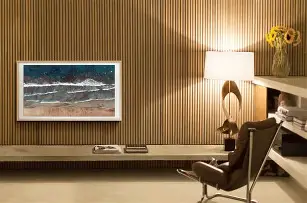
The Frame 2018 is more than just a television; it is a piece of industrial design that respects the architecture of the home. By leveraging hidden features like its sophisticated light-sensing algorithms, the all-in-one invisible connection, and highly customizable digital mattes, owners can create a viewing experience that is tailored to their specific lifestyle. While technology has marched on with brighter panels and faster processors, the core philosophy of the 2018 model—that a TV should be beautiful even when it is off—remains its most powerful feature. It serves as a reminder that the best technology is often the kind that knows when to get out of the way and let the beauty of your home take center stage.