Biggest Tp Link Eap725 Wall Access Point Buying Mistakes (And How to Avoid Them)
The transition to Wi-Fi 7 represents one of the most significant leaps in wireless networking history. For businesses, boutique hotels, and tech-forward homeowners, the TP-Link Omada EAP725-Wall is often the first device that comes to mind when looking to upgrade in-room connectivity. As a wall-plate access point, it is designed to replace a standard Ethernet wall jack, providing localized, high-speed Wi-Fi 7 coverage while maintaining wired ports for peripheral devices. However, the adoption of such cutting-edge technology often leads to expensive oversight. Because Wi-Fi 7 introduces new frequencies and power requirements, many buyers treat the EAP725-Wall as a simple "plug-and-play" replacement for older Wi-Fi 5 or Wi-Fi 6 units, only to find the performance underwhelming or the installation impossible. This article serves as a comprehensive guide to understanding this sophisticated hardware and navigating the common pitfalls that can derail an enterprise wireless deployment.
Detailed Product Analysis: The TP-Link Omada EAP725-Wall
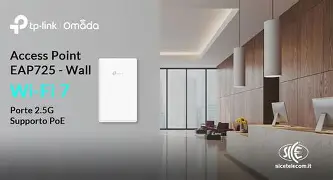
The TP-Link EAP725-Wall is a tri-band Wi-Fi 7 access point that fits into a standard electrical junction box. It is part of the Omada ecosystem, TP-Link’s professional-grade networking line. Unlike traditional ceiling-mounted units that broadcast signal across a wide area, wall-plate units are designed for high-density environments where structural interference—such as thick concrete walls or metal studs—makes centralized coverage difficult. The EAP725-Wall utilizes the 6 GHz band, which is the cornerstone of Wi-Fi 7 performance, offering virtually interference-free spectrum compared to the congested 2.4 GHz and 5 GHz bands.
Technically, the device is a powerhouse. It supports a total bandwidth capacity of up to 3600 Mbps (divided across the three bands). Key Wi-Fi 7 features integrated into the EAP725-Wall include Multi-Link Operation (MLO), which allows a client device to send and receive data across different frequency bands simultaneously, and 4K-QAM, which packs more data into each signal pulse. Physically, the unit features a sleek, slim profile that sits nearly flush against the wall. It typically includes a Gigabit uplink port on the back and several downlink ports on the bottom, allowing it to act as both a wireless hub and a local Ethernet switch for devices like VOIP phones, smart TVs, or desktop computers.
The primary appeal of the EAP725-Wall is its ability to deliver "invisible" infrastructure. In a hospitality setting or a premium office space, aesthetics matter as much as performance. The EAP725-Wall hides the networking hardware inside the wall, leaving only a clean, professional faceplate exposed. However, this compact form factor introduces constraints related to heat dissipation and antenna orientation that buyers must account for during the planning phase.
Common Buying Mistakes and How to Avoid Them
1. Overlooking 802.3at PoE+ Power Requirements
One of the most frequent mistakes buyers make is attempting to power the EAP725-Wall using standard 802.3af Power over Ethernet (PoE). While older wall-plate units could often run on the basic 15.4W provided by 802.3af, the high-performance radios required for Wi-Fi 7 and the 6 GHz band demand more power. The EAP725-Wall requires 802.3at PoE+ (approximately 30W) to operate at full capacity. If plugged into a standard PoE switch, the device may fail to boot, or more commonly, it will disable the 6 GHz radio or the downlink Ethernet ports to save power. Before purchasing, an audit of the existing switch infrastructure is mandatory to ensure there is enough PoE budget and the correct PoE standard is supported on each port.
2. Ignoring the Backbox Depths and Clearance
Because the EAP725-Wall is designed to be recessed into the wall, the physical dimensions of the junction box (backbox) are critical. European, American, and Asian junction boxes differ in size and depth. A common error is buying the unit for an older building where the electrical boxes are shallow. The EAP725-Wall requires a certain amount of internal space for the Ethernet cable termination and the bulk of the unit itself. If the box is too shallow, the faceplate will not sit flush, leaving an unsightly gap or putting dangerous pressure on the Ethernet cable header. Always measure the depth of the existing backboxes and ensure they meet the minimum specifications outlined in the TP-Link installation guide.
3. Neglecting the Importance of the Omada Controller
While the EAP725-Wall can technically function in "standalone" mode, it is designed to be part of a managed ecosystem. Many buyers purchase several units for a large home or office but neglect to buy or set up an Omada Controller (either hardware-based like the OC200/OC300 or software-based). Without the controller, features like seamless roaming—which allows your phone to switch from one room's access point to another without dropping a call—are significantly less effective. Furthermore, managing ten different wall units individually via their web interfaces is a maintenance nightmare. To avoid this, view the controller not as an optional accessory, but as a core component of the system.
4. Misunderstanding the Client Device Ecosystem
A common source of buyer's remorse is the expectation that installing a Wi-Fi 7 access point will instantly make every device in the building faster. To utilize the 6 GHz band and Multi-Link Operation, the client devices (phones, laptops, tablets) must also support Wi-Fi 7. While the EAP725-Wall is backward compatible with Wi-Fi 6, 5, and 4, older devices will not see a drastic speed increase. Buyers should evaluate their priority client devices first. If the majority of the hardware in the environment is more than three years old, the benefits of the EAP725-Wall will be "future-proofing" rather than immediate gratification.
Discover deals on Electronics — updated daily.
Browse Now →5. Poor Placement and Physical Obstructions
Wall-plate access points are often placed at desk height or behind furniture. This is a mistake. Wi-Fi signals, particularly the 6 GHz wavelength used by Wi-Fi 7, are easily attenuated by physical objects. Placing an EAP725-Wall directly behind a heavy wooden desk or a metal filing cabinet will severely cripple the signal strength within the room. Buyers should plan for the access points to be mounted in unobstructed areas. If the Ethernet jack is currently located behind a TV or a couch, consider using a short patch cable to move the mount point to a more visible, open area of the wall.
Pros and Cons of the TP-Link EAP725-Wall
- Pro: Ultra-Low Latency – Thanks to Wi-Fi 7's MLO and Multi-RU features, the EAP725-Wall provides the kind of low-latency performance previously only available via wired Ethernet, making it ideal for VR, gaming, and high-stakes video conferencing.
- Pro: Aesthetic Integration – The low-profile design is perfect for environments where massive, "spider-like" routers or ceiling-mounted domes would be visually intrusive.
- Pro: Integrated Switch – Most models include at least three Gigabit ports on the bottom, allowing you to connect a smart TV, a gaming console, and a VOIP phone directly to the wall unit without needing an extra desktop switch.
- Pro: Dedicated 6 GHz Band – By offloading high-bandwidth traffic to the 6 GHz band, the EAP725-Wall frees up the 2.4 GHz and 5 GHz bands for legacy IoT devices and older smartphones.
- Con: Heat Generation – Tri-band Wi-Fi 7 radios generate significant heat. In small, poorly ventilated junction boxes, the unit can get quite warm, which may lead to thermal throttling in extreme environments.
- Con: Range Limitations – Unlike ceiling-mounted EAPs, the wall-plate version has a radiation pattern optimized for a single room. It is not intended to provide signal through multiple walls or floors.
- Con: Premium Pricing – As an early-adoption Wi-Fi 7 device, the EAP725-Wall carries a higher price tag than Wi-Fi 6 or 6E equivalents, necessitating a higher initial investment.
Comparison: Wall-Plate vs. Ceiling-Mount Access Points
When choosing between a wall-plate unit like the EAP725-Wall and a traditional ceiling-mount unit like the EAP773, buyers often struggle to identify which fits their use case. The following table highlights the key differences to help prevent a misinformed purchase.
| Feature | EAP725-Wall (Wall-Plate) | EAP773 (Ceiling-Mount) |
|---|---|---|
| Primary Use Case | Individual rooms (Hotels, Dorms, Offices) | Open areas (Hallways, Cafeterias, Lobbies) |
| Coverage Pattern | Directional (Forward-facing from the wall) | Omni-directional (360-degree radius) |
| Installation | Recessed in wall junction box | Surface mounted on ceiling or wall |
| Wired Connectivity | Multiple local downlink ports | Single or dual uplink ports only |
| Aesthetics | Discreet faceplate | Visible circular or square dome |
| Signal Penetration | Weak (Designed for in-room use) | Moderate to Strong (Designed to cover multiple rooms) |
Comprehensive Buying Guide for the EAP725-Wall
To ensure a successful deployment of the TP-Link EAP725-Wall, buyers should follow a structured evaluation process. This prevents the "buy first, ask questions later" approach that often leads to installation failures.
Step 1: The Site Survey and Density Analysis
Determine the "device density" of your rooms. If you are a homeowner with only two or three devices per room, a single EAP725-Wall is likely overkill unless you require maximum speeds for specific tasks. However, in a professional setting where each room may have a laptop, a tablet, a smartphone, and several IoT sensors, the EAP725-Wall's ability to handle high-density traffic is its greatest asset. Map out where your current Ethernet drops are and decide if they need to be moved to ensure line-of-sight to the main workspace in each room.
Step 2: Power and Cabling Integrity
Check your cabling. To truly benefit from Wi-Fi 7 speeds, the cabling running from your switch to the access point should ideally be Category 6 (Cat6) or better. While Cat5e can support Gigabit speeds, it may struggle with the higher frequencies and potential 2.5G or 10G backhaul demands of future Wi-Fi 7 iterations. Additionally, verify your PoE switch's power budget. If you have 24 ports but a total power budget of only 150W, you cannot run 24 EAP725-Wall units, as they would require roughly 600W-720W of total power.
Step 3: Configuration Planning
Before the hardware arrives, decide on your management strategy. Will you use the Omada Cloud-Based Controller, or will you host a controller on a local server? For most small to medium businesses, the hardware controller (OC200) is the most reliable "set it and forget it" option. Planning your SSIDs (Network Names) is also vital. With a tri-band device, you have the choice of combining all three bands into one name (Smart Connect) or separating the 6 GHz band to ensure that only Wi-Fi 7/6E devices use that "fast lane."
Step 4: Future-Proofing vs. Current Needs
Ask yourself if you need Wi-Fi 7 today. If you are currently building a new home or renovating an office, installing the EAP725-Wall is a wise choice because the labor cost of opening walls is high. It is better to have the latest standard now than to need an upgrade in 24 months. However, if you are on a tight budget and your Internet service provider only gives you 100 Mbps or 300 Mbps speeds, you will not see the "speed" benefits of Wi-Fi 7, and a cheaper Wi-Fi 6 wall unit might suffice.
Looking for the best Electronics deals on Amazon?
Browse Now →Real-World Use Cases
The Modern Home Office: In this scenario, the user typically has a high-end workstation connected via Ethernet and several mobile devices. The EAP725-Wall replaces the desk's Ethernet jack. The workstation plugs into one of the bottom ports, while the Wi-Fi 7 radio provides a dedicated high-speed link for a wireless VR headset or a 4K video editing tablet. The result is a clutter-free desk with enterprise-grade performance.
Small Boutique Hotels: A hotel with 20 rooms can install one EAP725-Wall per room. This ensures that a guest in Room 10 cannot consume all the bandwidth for Room 11, as the Omada controller can set per-room bandwidth limits. The integrated ports also allow the hotel to provide a "hardwired" connection for the room's Smart TV and VoIP phone without running extra cables through the walls.
Educational Dormitories: Students often bring multiple high-bandwidth devices. Using wall-plate units ensures that the signal doesn't have to fight through the cinderblock walls typical of dorm construction. By placing the access point inside the room, the student gets a perfect signal, and the physical ports provide reliable connections for gaming consoles that might otherwise clog the wireless airwaves.
Conclusion
The TP-Link Omada EAP725-Wall is a pinnacle of localized wireless technology, effectively bringing the massive potential of Wi-Fi 7 into a footprint no larger than a standard light switch. While it offers unparalleled latency reduction, increased capacity, and a sophisticated aesthetic, it is not a "magic bullet" that works in every environment without preparation. The biggest mistakes—underpowering the device, stuffing it into shallow backboxes, or ignoring the necessity of a central controller—are all preventable with a modest amount of foresight.
By shifting from a centralized "broadcast" mentality to a localized "cellular" approach with wall-plate units, network administrators can provide a superior user experience. This is especially true as the 6 GHz band becomes the new standard for high-bandwidth applications. Avoiding the pitfalls of improper installation and mismatched hardware ensures that your investment in the EAP725-Wall pays dividends in the form of a stable, high-speed network that will remain relevant for many years to come. Networking is the invisible foundation of the modern digital experience; building that foundation on the latest standards like Wi-Fi 7, while respecting the physical and electrical requirements of the hardware, is the hallmark of a successful deployment.