Don't Buy Until You Read This: Msi Prestige 14 Flip Ai vs Razer Kiyo V2
Buying a laptop is often a compromise between performance, portability and the built‑in features a buyer sacrifices or gains. In recent years those decisions have extended beyond raw CPU/GPU choices: the quality of a laptop’s webcam, microphone and AI-driven features matter for hybrid workers, frequent travelers and creators. This article examines two very different but frequently compared purchases: the Msi Prestige 14 Flip Ai — a premium convertible laptop aimed at mobile professionals — and the Razer Kiyo V2 — an external webcam targeted at streamers and video creators. Rather than asking which is “better” in isolation, this article helps readers decide which device to prioritize for their real‑world needs: a new laptop with integrated capabilities, or a laptop plus a dedicated external webcam and accessories.
Why this comparison matters
Buyers typically weigh a single purchase against alternatives. A professional shopping for a 14‑inch ultraportable may wonder if an expensive built‑in webcam and AI features justify the laptop’s price, or whether pairing a lean laptop with a higher‑quality external webcam is smarter. Meanwhile, creators and streamers often trade portability for image fidelity and customizability. Comparing the Msi Prestige 14 Flip Ai and the Razer Kiyo V2 surfaces the tradeoffs between an all‑in‑one mobile device and a focused external accessory that upgrades one aspect of the user’s setup.
Product overviews
Msi Prestige 14 Flip Ai — what it brings to the table
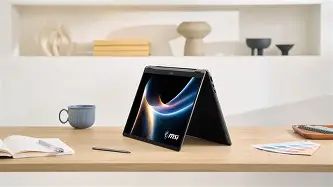
The Msi Prestige 14 Flip Ai is positioned as a premium convertible: a thin, light 14‑inch laptop with a 360° hinge, aimed at professionals who need a balance of performance, battery life and a flexible design for presentations, note taking, and travel. MSI emphasizes a high‑quality display, a comfortable keyboard, and modern connectivity. Recent models market AI features — like accelerated AI inferencing and camera‑assisted enhancements — that promise better video calls, background handling and power efficiency.
Real‑world buyers choose the Prestige 14 Flip Ai when they need:
- a capable, portable daily driver that can double as a tablet for sketches or presentations;
- long battery life for all‑day meetings and flights;
- a premium display for photo review or content consumption;
- built‑in features that reduce the number of accessories to carry.
However, integrated webcams on thin laptops often still lag behind what a dedicated webcam can deliver, especially for creators who need consistent exposure, color accuracy and advanced controls.
Razer Kiyo V2 — what it brings to the table
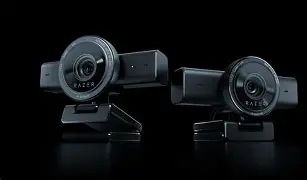
The Razer Kiyo V2 is an external webcam aimed at streamers, video creators and professionals who require better image quality than most integrated laptop cameras. External webcams like the Kiyo V2 typically offer improved sensors, adjustable framing, software for color and exposure control, and better low‑light performance. For people who spend many hours on video calls or produce live content, an external webcam is a targeted upgrade that dramatically improves on‑camera presence.
Buyers consider a webcam like the Razer Kiyo V2 when they need:
- noticeable improvements in image clarity, color and low‑light handling;
- frame rate and resolution flexibility for streaming or animated content;
- software customization for background, color grading and overlays;
- an upgrade path that works across multiple devices (desktops, multiple laptops).
Detailed analysis: in practical terms
Below is a closer look at how each device performs in the use cases buyers care about: remote work, travel, video creation/streaming, and hybrid teaching.
Remote work and video conferencing
For professionals who join many video meetings, two factors matter most: consistent camera output and clear audio. The Prestige 14 Flip Ai offers the convenience of built‑in hardware with some AI enhancements that can automatically adjust framing, apply background blur, or reduce noise. That convenience is valuable when moving between locations: there’s nothing extra to set up and fewer cables to manage.
Looking for the best Laptops & Computers deals on Amazon?
Browse Now →However, an external webcam like the Kiyo V2 often delivers superior image fidelity and more reliable low‑light handling. For users who want to appear sharp on camera, an external webcam can offer cleaner edges, better exposure control and software tuning to neutralize poor office lighting. If the laptop’s microphone is the limiting factor, adding a dedicated microphone or headset will still be necessary; a webcam alone won’t solve audio problems unless it includes a high‑quality built‑in microphone.
Content creation and streaming
Streamers and creators demand stable frame rates, clean image processing and software control. The Razer Kiyo V2 was designed for this audience: the combination of sensor performance and vendor software gives finer control over exposure, white balance, and framing — and the ability to output at higher frame rates matters for fluid motion.
The Prestige 14 Flip Ai can be a compelling all‑in‑one for creators who prioritize portability and need to edit, light‑grade or manage creative apps on the go. But for live streaming or high‑grade vlogging, creators usually prefer a dedicated camera (webcam or mirrorless camera with capture card) because the image quality and manual control are more consistent.
Travel and hybrid use
When traveling, buyers often prefer to carry less. The Prestige 14 Flip Ai wins on portability — one device that handles productivity tasks, presentations and casual video calls. Carrying an external webcam adds bulk and another accessory to pack. That said, many external webcams are compact and USB‑powered, so a light accessory can be worth the incremental luggage space for users who need better on‑camera presence.
Pros & cons
Msi Prestige 14 Flip Ai — pros & cons
- Pros:
- Premium all‑in‑one design: laptop + convertible hinge + stylus support for creativity and presentations.
- Excellent portability and battery life for full‑day productivity on the go.
- Integrated AI features that simplify video calling and system management.
- Fewer accessories to carry; clean single‑device workflow.
- Cons:
- Built‑in webcam image quality may trail dedicated webcams under challenging lighting.
- Limited manual control over camera exposure and color compared with external webcams.
- When peak camera performance is required, one must still invest in an external webcam or camera.
Razer Kiyo V2 — pros & cons
- Pros:
- Focused upgrade for on‑camera quality: better sensors, exposure handling and software controls than most integrated laptop webcams.
- Flexible mounting and framing options for desktop or laptop use.
- Works across multiple machines — a single purchase benefits all devices in a home studio.
- Designed for streaming, with features geared toward content creators.
- Cons:
- Adds another item to carry and set up, which matters for frequent travelers.
- Does not replace the need for separate audio solutions if the microphone is inadequate.
- Value proposition weak for users who rarely use video or whose lighting is already excellent.
Comparison table
| Feature | Msi Prestige 14 Flip Ai | Razer Kiyo V2 |
|---|---|---|
| Device type | 14" convertible laptop with integrated webcam and AI features | External USB webcam aimed at streamers and creators |
| Primary strength | Portability and all‑in‑one productivity | Superior on‑camera image quality and control |
| Image quality | Good for meetings; limited by small laptop camera hardware | Generally better color, exposure and low‑light handling |
| Low‑light performance | Adequate with AI enhancements; depends on display bezel space | Stronger due to larger sensor and tuning options |
| Microphone | Built‑in mics suitable for calls; may pick up room noise | May include mics, but for best audio a dedicated mic is recommended |
| Portability | Excellent — single device for work and presentations | Portable but adds an extra item to the kit |
| Software/customization | System‑level AI and camera processing integrated into OS | Vendor software for exposure, color and streaming integrations |
| Best for | Traveling professionals, designers who need a convertible | Streamers, creators, professionals prioritizing image quality |
Buying guide — how to choose
Choosing between investing more in a laptop like the Msi Prestige 14 Flip Ai or prioritizing an external webcam such as the Razer Kiyo V2 depends on how the buyer uses video and what compromises are acceptable. Below are decision checkpoints to guide a purchase.
1. Define primary use: productivity or production?
If the main tasks are writing, spreadsheets, presentations and occasional video meetings, a premium convertible laptop that balances battery life, a great keyboard, and a decent built‑in camera will satisfy most needs. If the primary use is streaming, video production, or professional client presentations that require the best possible on‑camera appearance, an external webcam — or even a small mirrorless camera used as a webcam — is the better investment.
2. How important is portability?
Travelers and frequent commuters often choose to minimize the gear bag. A single host device that does everything reduces setup time and weight. An external webcam adds little weight, but it is another accessory to track and pack. Decide whether the performance gain is worth the extra item when mobility is a priority.
3. Lighting and environment
Webcam performance is tightly coupled with lighting. Many people overestimate how much a webcam can fix poor lighting. If the buyer works in a well‑lit office or has a home office kit (softbox, desk lamp), the difference between built‑in and external webcams shrinks. In dim or variable lighting, external webcams with better sensors and software tuning provide a much clearer lift.
Looking for the best Laptops & Computers deals on Amazon?
See Deals →4. Audio needs
Camera upgrades rarely solve audio quality. If audio clarity is critical (podcasts, client calls), plan to add a dedicated microphone or headset. Assess whether the laptop’s built‑in microphones are adequate before relying solely on an external webcam to improve meeting quality.
5. Future‑proofing and flexibility
An external webcam can move between devices: desktop, tablet stand, or multiple laptops. For teams that use more than one machine, the external webcam is a portable upgrade that amortizes across devices. A new laptop is a larger investment and replaces more components, but an external webcam remains useful even after a laptop upgrade.
6. Budget allocation
Evaluate the total cost of ownership. A premium laptop with a “good enough” built‑in camera may cost more upfront but reduce the need for accessories. Conversely, buying a midrange laptop and allocating budget to a high‑quality external webcam can achieve better on‑camera results while keeping laptop costs down.
7. Software and ecosystem
Consider the vendor software each product provides. AI features in modern laptops can streamline tasks (background removal, auto framing) at the system level, while webcam vendor software often gives fine‑grained camera control and integration with streaming platforms. Determine which type of software fits the user’s workflow.
Real‑world scenarios and recommendations
Below are practical recommendations based on typical buyer profiles.
- Frequent traveler, heavy productivity: Choose the Msi Prestige 14 Flip Ai. The convenience and battery life outweigh the incremental camera improvement from an external webcam unless video quality is mission‑critical.
- Remote worker who does occasional client meetings: Start with the laptop’s built‑in camera and evaluate. If meetings frequently include stakeholders where image quality matters, add an external webcam like the Razer Kiyo V2 later.
- Streamers and creators: Invest in the external webcam first. The Razer Kiyo V2 or a higher‑end camera will yield the most visible improvement for live content. Use a modest laptop for editing, but prioritize camera and audio equipment.
- Hybrid teacher or lecturer: If lecturing remotely from multiple locations, a good laptop with AI features is useful for portability, but a dedicated webcam will make recorded lessons look more professional and reduce viewer fatigue.
Checklist before purchase
- How many hours per week will the device be used for video calls or streaming?
- Is the priority portability or image fidelity?
- What is the current lighting situation and can it be improved affordably?
- Does the buyer already own a decent microphone?
- Will the webcam be used across multiple devices?
- Does vendor software (AI features, camera controls) integrate with existing workflows?
Conclusion
There is no universal answer: the best choice depends on priorities. The Msi Prestige 14 Flip Ai is an appealing option for users who need a premium, portable convertible that simplifies travel and reduces the number of devices to manage. It will handle everyday video calls and includes conveniences that matter to professionals on the move. The Razer Kiyo V2 represents a targeted investment in on‑camera performance; for streamers, creators, or anyone whose work depends on looking great on video, an external webcam delivers a clear improvement in image control and consistency.
For most buyers the sensible path is pragmatic: if portability and a single‑device workflow are paramount, favor the laptop. If video quality is central to professional output, prioritize the external webcam and pair it with a capable laptop. Many users end up in the middle — buying a high‑quality portable laptop and adding a compact external webcam when their on‑camera needs escalate. Assess use cases, test a sample video call if possible, and choose the device that aligns with the buyer’s daily habits and professional standards.