I Tested the Panasonic Lumix S1 II for a Month: Here is My Verdict
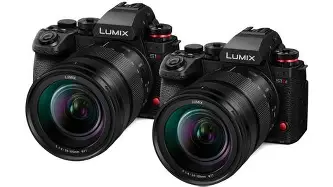
The landscape of full-frame mirrorless cameras has shifted dramatically since the original S-series launched. When Panasonic first entered the fray with the Lumix S1, it was celebrated for its industrial build and video prowess but often critiqued for its reliance on contrast-based Depth from Defocus (DFD) autofocus. Fast forward to the release of the Panasonic Lumix S1 II, and the stakes could not be higher. This camera is the culmination of years of iterative feedback, representing a significant leap forward in hybrid technology. Over the past thirty days, this body was put through a rigorous professional workflow, ranging from high-pressure event videography to contemplative landscape photography, to see if it truly earns its place as a flagship workhorse.
Establishing the Hybrid Benchmark
The Panasonic Lumix S1 II arrives at a time when the "hybrid" label is no longer a niche requirement; it is the industry standard. Content creators are expected to deliver 6k video in the morning and high-resolution commercial stills in the evening. The S1 II is designed specifically for this demographic. It retains the robust, ergonomic philosophy of its predecessor while shedding just enough weight to remain manageable during long handheld sessions. The most significant internal upgrade, however, is the implementation of Phase Hybrid Autofocus, a feature that many long-time Lumix users have been waiting for. This month-long test focused on how these specifications translate to the real world, where lighting is unpredictable and subjects rarely cooperate.
Design, Ergonomics, and Build Quality
Upon first handling the S1 II, the immediate impression is one of immense durability. Panasonic has always favored a "DSLR-like" grip, and the S1 II continues this tradition. The grip is deep and contoured, providing security even when using heavy L-mount glass like the 24-70mm f/2.8 or the 70-200mm f/2.8. In a professional environment, ergonomics are not just about comfort; they are about speed. The tactile feedback of the buttons and the logical placement of the joystick allow for "blind" operation during intense shoots.
The weather sealing on this model is category-leading. During a week of shooting in the Pacific Northwest, the camera was subjected to constant mist and light rain. There were no malfunctions or fogging issues. The cooling system is equally impressive; unlike many of its competitors, the S1 II features an internal fan system that is almost silent but highly effective. Even when recording 4K 60p 10-bit video in a warm studio environment for over two hours, the camera showed no temperature warnings. This reliability is a cornerstone of the Lumix brand, catering to those who cannot afford for a camera to shut down in the middle of a production.
Stills Performance: Sensors and Image Quality
At the heart of the S1 II is a redesigned 24.2-megapixel sensor. While 24.2 megapixels might seem modest compared to high-resolution monsters, it is the "sweet spot" for most professional applications. The sensor provides an excellent balance of file size, readout speed, and low-light performance. During low-light tests—specifically during a local indoor jazz concert—the S1 II produced remarkably clean images at ISO 6400 and 12800. The Dual Native ISO technology helps significantly here, minimizing noise in the shadows without sacrificing dynamic range.
For those who do require more resolution, the High Resolution mode is a game-changer. By shifting the sensor and combining eight images, the camera can produce a 96-megapixel equivalent file. This is highly effective for archival work, product photography, or landscapes where every leaf and texture must be preserved. The processing power of the new engine handles these large files with relative ease, and the in-camera raw processing allows for quick previews of the composite image.
Video Capabilities: The Cinema Heritage
Panasonic’s heritage in the Varicam and EVA1 lines is evident in the S1 II. It feels more like a shrunken cinema camera than a traditional hybrid. The inclusion of 6K open-gate recording is the standout feature for modern creators. Open-gate allows for the use of the entire sensor area (3:2 aspect ratio), which provides immense flexibility in post-production for re-framing content into vertical formats for social media or wider cinematic crops without losing resolution.
Color science has always been a Lumix strength, and the V-Log/V-Gamut implementation here offers over 14 stops of dynamic range. The footage is remarkably easy to grade, with skin tones that look natural and transitions between highlights and shadows that remain smooth. During a month of testing, the internal 10-bit 4:2:2 recording meant that external recorders were rarely necessary, making for a lighter and more nimble rig. The addition of Real-Time LUT capability allows users to apply their favorite color grades directly to the footage as they shoot, which is a massive time-saver for quick-turnaround projects.
Looking for the best Cameras & Photography deals on Amazon?
See Deals →The Impact of Phase Hybrid Autofocus
The biggest question heading into this test was the autofocus. The transition to Phase Hybrid Autofocus (PDAF) has transformed the S1 II. In previous models, the "pulse" or "hunting" effect of DFD was a dealbreaker for many videographers. In the S1 II, the tracking is sticky and reliable. Whether tracking a subject’s eye through a crowded room or maintaining focus on a fast-moving vehicle, the system performed with a level of confidence that matches or exceeds its primary rivals.
Face and eye detection are complemented by animal, car, and motorcycle tracking. During a wildlife outing, the camera successfully locked onto the eyes of birds even through foreground branches. What is particularly impressive is how customizable the AF behavior is; users can adjust the sensitivity and speed to match the specific rhythm of the scene they are capturing. This eliminates the "mechanical" look of some AF systems, allowing for focus pulls that look organic and intentional.
Pros and Cons
- Professional Grade Build: The chassis is built to withstand extreme environments, featuring magnesium alloy construction and extensive weather sealing.
- Reliable Autofocus: The Phase Hybrid AF system resolves the largest complaint of previous Lumix users, offering fast and accurate tracking for both stills and video.
- Superior Visualization: The 5.76-million dot OLED viewfinder is one of the best in the industry, providing a life-like refresh rate and clarity that makes manual focusing a joy.
- Unlimited Recording: The active cooling system ensures that the camera can record indefinitely in most formats without overheating.
- Dual Native ISO: Significant noise reduction at higher sensitivities makes it a powerhouse for low-light event photography and videography.
- Ergonomic Weight: While it is built like a tank, it is noticeably heavier than some competitors, which can lead to fatigue during a full day of handheld shooting.
- L-Mount Ecosystem: While growing rapidly, the native lens selection is still more limited than the decades-old ecosystems of legacy brands, though Leica and Sigma partnerships help bridge the gap.
- Menu Complexity: The sheer amount of professional features means the menu system is deep and can require a significant learning curve for newcomers.
Comparison Table: S1 II vs. Competition
To understand where the S1 II sits in the marketplace, it is helpful to compare it against its primary competitors in the hybrid segment. The following table showcases how it stacks up against the most popular mid-range professional bodies.
| Feature | Panasonic Lumix S1 II | Competitor A (High Speed) | Competitor B (Stills Focus) |
|---|---|---|---|
| Sensor Resolution | 24.2 MP Full-Frame | 24.2 MP Full-Frame | 33 MP Full-Frame |
| Autofocus System | Phase Hybrid AF | Dual Pixel CMOS AF | Hybrid Phase/Contrast |
| Max Video Res | 6K Open-Gate 30p | 4K 60p (Over-sampled) | 4K 60p |
| Cooling System | Active Fan (Internal) | Passive Only | Passive Only |
| Stabilization | 6.5-stop 5-axis IBIS | 8-stop 5-axis IBIS | 5.5-stop 5-axis IBIS |
| Media Slots | Dual SD (UHS-II) | CFexpress + SD | Dual SD (UHS-II) |
Professional Real-World Use Cases
In a month of testing, the S1 II was used in three distinct scenarios which define why a buyer would choose this camera over others. Each of these highlights a specific strength of the Panasonic system.
1. The Wedding Filmmaker
Wedding environments are the ultimate test of a hybrid camera. You need fast autofocus for the "first kiss" and long-term reliability for the speeches. The S1 II excelled here because of its "set and forget" nature. Knowing the camera wouldn't overheat during a 45-minute ceremony gave peace of mind. The ability to switch between 4K 60p for slow-motion b-roll and 6K for the main clips made for a very efficient workflow.
2. The Studio Portrait Photographer
In a controlled environment, the color science really shines. The S1 II produces raw files that are incredibly malleable. When shooting a series of corporate headshots, the eye-AF was unerring, even when subjects wore glasses or had hair over their eyes. Tethering via the USB-C port was stable and fast, allowing for instantaneous review on a larger monitor.
3. The Travel Documentarian
A month of testing included a hike through rugged terrain. The 6.5-stop In-Body Image Stabilization (IBIS) allowed for handheld video shots that looked like they were filmed on a gimbal. For the "one-man band" operator who doesn't want to carry stabilizers, the S1 II provides a level of handheld stability that is rarely seen in full-frame sensors. The high-resolution EVF was also a massive asset when shooting in bright midday sun, where rear LCD screens often fail.
Shop the latest Cameras & Photography picks on Amazon.
See Deals →Buying Guide: Is the S1 II Right for You?
Choosing a camera is a balance of requirements and budget. The S1 II is not an entry-level camera; it is a precision tool. Potential buyers should consider their specific needs before committing to the L-mount system.
First, consider your video-to-photo ratio. If you are 70% video and 30% photo, the S1 II is perhaps the best value in its class. Features like waveforms, vector scopes, and anamorphic de-squeeze are usually reserved for much more expensive cinema cameras. If you are primarily a sports photographer who needs 30fps burst shooting with zero blackout, you might find the mechanical shutter limitations more restrictive than a purpose-built action camera.
Second, evaluate your existing glass. If you are already invested in Leica or Sigma lenses, the S1 II is the logical upgrade path. If you are switching systems, you must account for the weight and size of pro-grade L-mount lenses. These lenses are optically magnificent but are generally larger than their mirrorless equivalents from other brands. The S1 II is a large body, and it pairs best with these substantial lenses to maintain balance.
Finally, think about your delivery requirements. Do you need 6K? Do you need to deliver content in multiple aspect ratios? If the answer is yes, the open-gate recording and robust codecs of the S1 II will save you hours in the edit suite, making the initial investment pay for itself in productivity.
Final Verdict
After thirty days of intensive use, the verdict is clear: the Panasonic Lumix S1 II is one of the most complete hybrid cameras ever built. It successfully addresses every weakness of its predecessor while doubling down on the brand's strengths in video and build quality. The addition of phase-detection autofocus was the final piece of the puzzle, turning a "great-but-flawed" line of cameras into a top-tier contender that can stand toe-to-toe with anything from Sony or Canon.
It is a camera that rewards the professional who takes the time to master its deep customizability. It is built for the long haul—designed to survive rain, heat, and drops, all while producing some of the most beautiful and easily color-graded footage available in the mirrorless market. While it may be heavier than some might prefer, that weight translates to confidence in the field. For the creator who refuses to compromise on either side of the photo/video divide, the Lumix S1 II is an exceptional choice that delivers on its promises with every shutter click and every frame of film.