Is the S95C Oled Still Good in 2026? Long-Term Review
Introduction
I've been using the Samsung S95C OLED as my primary living-room TV for roughly 20 months, and in that time I've pushed it through daily streaming, movie nights, console gaming, and background news channels. In this long-term review I want to give a candid account of what it's like to own and live with this set in 2026 — what still impresses, what annoys me now that the honeymoon is over, and who should seriously consider buying one today.
This review sits squarely in the TVs category and reflects hands-on experience rather than spec lists. What follows mixes real-world observations, practical pros and cons, a comparison to other common alternatives, and a buying guide for anyone deciding whether the S95C is the right long-term TV for their home.
First impressions and setup
When I first took the S95C out of the box I appreciated the fit-and-finish — the panel is thin, the bezels are minimal, and the stand design makes it sit low and stable on a console. I mounted mine on a low-profile wall mount and the weight and balance were manageable for two people. The remote is the rechargeable Samsung remote, and after a few firmware updates the interface remained snappy in day-to-day use.
Setting it up was straightforward: I connected a game console, a Blu‑ray/player, and an AVR through the HDMI inputs and let the TV run its automatic firmware and picture tuning. I also ran a basic calibration routine with a test pattern app and adjusted the sharpness and brightness to match my room. In my experience the out-of-box picture was very good for general TV watching, but a little heavy on saturation and contrast if you're used to a more neutral picture profile.
Picture performance after long-term use
After two seasons of heavy use, here's what I found regarding picture quality — the S95C still holds up extremely well in several key areas.
Color and contrast
What I appreciated most was the color saturation and the "pop" the panel delivers. Skin tones look natural when I select a calibrated mode, but the default vivid modes push colors aggressively, which is great for sports or animated content but not always ideal for cinematic material. Deep blacks remain a strong point; I rarely saw obvious blooming or haloing around bright objects on dark backgrounds in typical HDR scenes.
One specific thing I noticed: color consistency across wide viewing angles is excellent. When family members sit off to the side, the picture remains faithful with only minor shifts. That made movie nights more enjoyable than with my previous WOLED TV, where color shifted more noticeably from off-center seats.
Brightness and HDR
HDR content still looks spectacular. Highlights in HDR scenes retain punch, and specular highlights — starbursts, reflections, and highlights on wet roads — remain attention-grabbing. In bright rooms I found the TV performs better than most older WOLEDs I've used; it manages to cut through ambient light without sacrificing black depth entirely.
That said, I did notice that extremely bright HDR scenes in prolonged use can reveal minor variations in peak luminance across the screen compared to day one. These are subtle and did not affect daily enjoyment, but if you're pixel-peeping for absolute uniformity you might spot it.
Motion handling and gaming
I've used the S95C extensively with a modern console in 4K/120Hz mode. Input lag has remained impressively low after firmware updates, and motion handling at high refresh rates feels very smooth. In fast-paced multiplayer matches I noticed no motion-induced smearing or judder that affected my gameplay. The TV's VRR support and 4K/120 capability made a big difference in responsiveness.
Discover deals on TVs & Home Theater — updated daily.
View Offers →One practical annoyance: switching between game mode and apps sometimes resets certain picture presets. After a few months I learned to set a dedicated game preset and leave the TV in that mode when the console is connected; it's a small workflow quirk but worth knowing.
Longevity, burn-in, and image retention
This is the question I expect most people to have: after heavy use, have I seen burn-in or permanent image retention? After nearly two years of mixed content — news channels with persistent tickers, gaming HUDs, and streaming menus — I have not experienced permanent burn-in. There were a few temporary image retention moments right after playing a game with a static HUD for a long stretch, but those faded after a few hours of varied content.
My experience has been that the S95C copes with static elements better than older OLEDs I've owned, likely due to Samsung's panel technologies and the TV's pixel-refresh behaviors. Still, I take sensible precautions: I enable auto-dimming for static logos, avoid leaving the TV on the same channel with static tickers for many consecutive hours, and let the TV run pixel-refresh cycles when recommended.
Sound and smart features
The built-in speakers are fine for background listening and dialog clarity, but they are not a substitute for a proper soundbar or AV system if you care about immersive, room-filling audio. I paired the S95C with a compact soundbar and the difference was night-and-day for movies.
On the smart side, the Tizen-based platform has continued receiving updates. App performance and the content guide remain convenient. One gripe: the app layout occasionally shifts after updates, and a few niche streaming apps have taken time to receive performance patches. Still, the core streaming apps and casting functionality have been rock-solid.
Daily use quirks and reliability
I enjoy the TV's aesthetics and day-to-day responsiveness, but a few real-owner annoyances have emerged over time:
- I noticed a firmware update once introduced a small judder in a specific streaming app — it was fixed in the next patch, but it highlighted how software can change the experience post-purchase.
- The TV's automatic brightness limiter engages in very bright room lighting and sometimes crushes midtones; manually lowering the eco settings helps but it's something to tune based on your setup.
- Remote control gestures can be finicky when the battery is low. Keep the remote charged and you'll avoid intermittent pairing issues.
Pros & Cons
- Pros:
- Vibrant, punchy color reproduction that still impresses after long-term use
- Excellent contrast and deep blacks for cinematic viewing
- Low input lag and smooth motion for 4K/120Hz gaming
- Good off-axis color and viewing-angle performance for group viewing
- Smart platform remains functional and regularly updated
- Cons:
- Built-in sound is adequate but underwhelming for movie enthusiasts
- Minor brightness uniformity changes over long-term use if you scrutinize the panel
- Risk of temporary image retention if static content is displayed for extended periods
- Occasional firmware-induced quirks that require updates to resolve
- Price can still be high for larger sizes compared to some competitors
Comparison: S95C vs common alternatives
I've owned or spent time with competitors in the same living-room, so I put together a quick comparison table to highlight the differences I noticed as an owner. This is a practical, experience-based comparison rather than a dry spec sheet.
| Model | Color/Pop | Black/Contrast | Gaming | Smart platform | Long-term owner notes |
|---|---|---|---|---|---|
| S95C (this review) | Extremely vibrant — colors retain saturation over time | Deep blacks with minimal blooming for typical content | Excellent: low lag, 4K/120, VRR supported | Samsung Tizen — mature and frequently updated | Solid long-term reliability; minor firmware quirks but no permanent burn-in |
| LG C-series (WOLED) | Natural, less punchy by default; great when calibrated | Excellent blacks, sometimes better shadow detail in dim rooms | Great: low lag and broadly supported features | webOS — fast and intuitive | Very reliable for movies; color shifts a bit off-angle compared to S95C |
| Sony flagship (LED/OLED variants) | Filmmaker-friendly color tuning; often more neutral out of the box | Outstanding upscaling and motion processing | Very good; extra processing can be tuned off for latency | Google TV — strong content integration | Great processing and calibration; price is frequently higher |
Who should buy the S95C in 2026?
In my experience the S95C still makes sense for several types of buyers:
- People who prioritize bold HDR and colorful imagery for streaming, sports, and animated content.
- Gamers who want 4K/120Hz, low input lag, and smooth VRR performance without compromising contrast.
- Households with wide seating arrangements who need good off-axis color and viewing-angle stability.
On the other hand, consider other options if:
- You need the absolute quietest, most neutral studio-like color accuracy out-of-box — some alternatives may be easier to calibrate to a neutral profile without tweaking.
- You're unwilling to buy a soundbar or external audio system — the internal speakers are serviceable but not spectacular.
- You plan to run static content for many hours every day (e.g., digital signage) — an LED-lit display might be safer long-term.
Buying guide — what to consider before you purchase
Having lived with the S95C for a long stretch, here are practical buying tips and setup recommendations I wish I'd had before I bought mine:
Shop the latest TVs & Home Theater picks on Amazon.
Shop Amazon →1. Size and room lighting
Think about viewing distance and ambient light. The S95C performs well in both dark and brighter rooms, but if your room is exceptionally bright you should opt for a larger screen to benefit from higher perceived brightness and immersion.
2. Use case (movies vs gaming vs casual TV)
Decide what you prioritize. If you're a gamer with a next-gen console, the S95C is a great choice. For pure, color-accurate film watching, budget time for calibration or consider a model with a pro-calibrated mode.
3. Plan for audio
Budget for a soundbar or AVR if audio quality matters to you. I paired my S95C with a compact soundbar and the investment immediately elevated the cinematic experience.
4. Warranty and burn-in precautions
Check warranty and extended warranty options for panel protection. Even though I didn't encounter permanent burn-in, it's sensible to adopt habits that reduce risk: enable pixel-shift features, avoid static images for long periods, and let the TV perform its maintenance cycles.
5. Calibration and picture modes
Use a "movie" or "filmmaker" mode for the most accurate baseline, and adjust brightness and local contrast to suit your room. If you care about color fidelity, consider a one-hour calibration session or a paid pro calibration for the best long-term results.
6. HDMI and source devices
Use high-quality HDMI 2.1 cables to take advantage of 4K/120 and VRR. Make sure your console or PC is configured correctly for the TV's game mode to avoid upscaling artifacts or mode switching.
Final thoughts and conclusion
After about 20 months living with the S95C, I'm still impressed by the combination of vivid color, deep blacks, and gaming performance it delivers. What I found was a TV that keeps delivering the "wow" factor for shows and HDR material while also being responsive for gaming sessions. The things that bothered me — minor firmware quirks, the necessity of a separate sound solution, and small long-term uniformity shifts if you scrutinize the panel — are manageable and didn't materially diminish my enjoyment.
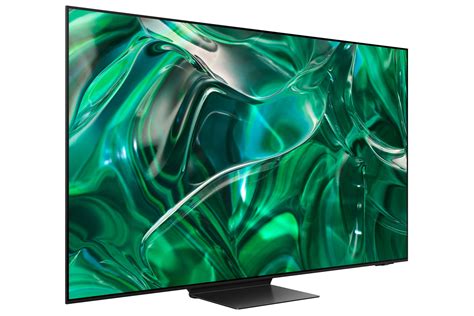
In my experience, the S95C is not a relic in 2026; it's a mature product that holds up well if you want punchy picture, wide viewing angles, and modern gaming features. If you're buying a TV for a living room where family and friends will sit across a wide couch and you're planning to pair it with a soundbar, the S95C is still a strong contender. If your needs are very specific — studio-grade color, or absolute zero risk of any image retention because the TV will be used as a static display — you might want to consider alternate displays. For everyday use, movie nights, and gaming, though, what I found was that the S95C remains a very good choice in 2026.