Spec Battle: Edifier M60 vs Philips Fidelio Fa3 — Is It Worth Upgrading?
Headphone and earphone buyers often face a familiar dilemma: does the jump from one well-regarded model to another justify the expense and disruption of changing gear? This comparison looks at two products that attract attention for different reasons — the Edifier M60 and the Philips Fidelio Fa3 — and evaluates whether an upgrade is warranted for typical listeners and real-world use cases. Rather than a shallow spec list, the article focuses on practical differences in sound, build quality, features, comfort, and long-term value so readers can decide which model aligns with their priorities.
Quick product overviews
Edifier M60 is positioned as a contemporary offering that balances modern feature sets with competitive pricing. It targets buyers who want a versatile daily driver: usable with phones and laptops, comfortable for extended wear, and tuned to suit a variety of playback material. The Edifier line commonly emphasizes value — offering decent materials, sensible ergonomics, and useful connectivity options without pushing into luxury price brackets.
Philips Fidelio Fa3 sits in Philips's higher-fidelity Fidelio family, which traditionally prioritizes a more refined listening experience. Fidelio-branded models are more likely to emphasize premium materials, a considered sonic signature, and a focus on home listening or critical enjoyment. The Fa3 is aimed at listeners who place sound quality and build refinement above raw feature count.
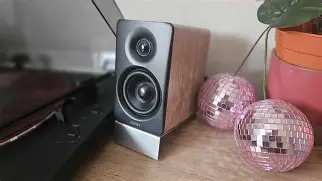
Design and build: materials, durability, and fit
Design choices often signal the product’s intended use. The Edifier M60 tends to favor modern, user-friendly touches: pragmatic plastics reinforced with metal where needed, collapsible or travel-friendly hinges on over-ear models, and straightforward controls on wireless variants. The emphasis is durability that remains cost-effective, which makes it well suited for commuters, hybrid workers, and anyone who moves between devices frequently.
The Philips Fidelio Fa3 typically leans into higher-end materials and finishing. Fidelio models historically use denser headband pads, stitched or perforated cushions, and metal accents that communicate longevity and a premium feel. Fit is tuned toward stationary listening sessions — long-form music enjoyment on the couch or at a dedicated desk — though many Fidelio models are still comfortable enough for prolonged use.
For buyers who prioritize portability and resilience to daily wear, the Edifier approach often wins. For those who prize an elevated tactile experience and build that looks at home in a hi-fi setup, the Philips option is more persuasive.
Sound signature and performance: clarity, bass, imaging, and tonality
Sound preference is personal, but there are objective differences to consider. The Edifier M60 is usually tuned with a balanced, consumer-friendly profile: a bit of bass presence to bring impact to modern pop and streaming content, clear mids for vocals and podcasts, and reasonably extended treble for detail. That makes it a reliable all-rounder for mixed playlists and multimedia use.
Philips Fidelio models typically target a more natural, nuanced presentation. The Fa3 aims for a refined midrange and more carefully controlled bass, prioritizing instrument texture, vocal timbre, and soundstage coherence. The result is a listening experience that rewards well-produced recordings, acoustic genres, and critical listening where subtlety matters.
In practical terms, the Edifier M60 will please listeners who stream a variety of content and want an engaging, slightly colored sound that translates across genres. The Fidelio Fa3 is likely to appeal to listeners who want resolving power and realistic tonal balance for albums, classical, jazz, and critical evaluation of mixes.
Features and connectivity
Feature sets vary by target user. Edifier products frequently include contemporary conveniences: multi-device Bluetooth pairing, app-based EQ presets, and sometimes active noise cancelling or ambient modes on wireless variants. These features cater to daily multitaskers who need seamless switching between phone calls, video conferencing, and music.

Fidelio models are less feature-laden in many cases, concentrating on passive performance. The Fa3 may lean toward traditional wired connectivity or higher-quality wireless codecs for listeners who use dedicated DACs or prioritize lossless playback. Where advanced active features are present, Fidelio often implements them conservatively to avoid compromising core sound quality.
Buyers who want the latest convenience features and phone-friendly tools will find the Edifier offering more immediately useful. Those building a hi-fi chain, or who already own high-resolution sources, will appreciate Philips's focus on a clean signal path and minimal processing.
Comfort and long sessions
Comfort is a high-stakes variable for anyone who listens for hours. The Edifier M60 generally balances padding and clamping force for everyday wear. Earcup materials tend toward breathable synthetic leather or cloth options that perform acceptably in typical environments.
Philips Fidelio Fa3 models place a premium on comfort: plush earpads, effective pressure distribution on the headband, and careful ergonomics. That makes a Fidelio model a strong candidate for long listening sessions at home or during studio work.
Discover deals on Audio & Headphones — updated daily.
Shop Amazon →Listeners who need lightweight, travel-friendly comfort with reasonable isolation will prefer Edifier. Listeners who prioritize extended comfort with a premium feel will gravitate toward the Fidelio Fa3.
Microphone and call performance
Microphone quality is a primary concern for remote workers and gamers. Edifier's recent models tend to include functional microphone systems — whether integrated boom mics on gaming-oriented designs or fitted inline mics for earbuds — that are optimized for speech clarity, background noise suppression, and call reliability.
Philips Fidelio models are often less focused on telephony. If the Fa3 is primarily a listening product, microphone performance may be basic or absent; the design intent is musical fidelity rather than communication convenience.
For hybrid workers and frequent callers, Edifier is the practical choice; for listeners whose calls are secondary to music, the Philips option remains compelling.
Portability and battery (if wireless)
If the product variant is wireless, battery life and portability are central. Edifier's wireless variants typically deliver competitive battery runtimes and practical charging conveniences (USB-C, quick charge) aimed at daily commuters and travelers.
Fidelio wireless models historically balance battery life with sound quality; however, many in the Fidelio family prioritize wired connectivity or premium wireless codecs over long-life battery-first design. For home listeners, battery duration matters less than fidelity.
Travel-oriented buyers will value Edifier's runtime and protective folding designs. Home-based audiophiles will place less weight on battery specs and more on how the headphones integrate with existing components.
Setup, tuning, and ecosystem
Edifier often supports app-based tuning and accessible EQ presets, allowing owners to tailor sound to headphones and source material. This flexibility is attractive for users who like to tweak settings based on room acoustics or content type.
Philips Fidelio tends to assume a purist chain; when tuning is available it is usually conservative. The Fa3 benefits more from quality source equipment and amplification than from aggressive digital EQ.
Buyers who enjoy personalization and software features will find Edifier's ecosystem useful. Audiophiles who prefer out-of-the-box balance that complements good sources will prefer Philips's philosophy.
Value and price positioning
Edge-of-market pricing is where the purchase decision often hinges. Edifier typically targets aggressive value — delivering a lot of useful features for the money. Philips Fidelio usually commands a premium reflecting materials and a sonic focus suited to listeners who prioritize quality over features-per-dollar.
For a buyer wondering whether to upgrade: if the current headphones lack modern conveniences (reliable Bluetooth, decent mic, portable design) and the Edifier M60 would replace them, that is a pragmatic upgrade. If the listener already owns a neutral, high-quality set and is debating moving to a more refined, premium sonic presentation, the Fidelio Fa3 could represent a meaningful step up — but at a cost that must be justified by listening priorities.
Pros & Cons
Edifier M60
- Pros: Modern feature set (connectivity and convenience); generally strong value for money; versatile tuning that suits a wide range of genres; practical ergonomics for travel and daily use.
- Cons: May sacrifice a degree of resolution and tonal neutrality compared with premium rivals; build materials are typically cost-optimized rather than luxurious; higher-end source pairing may reveal limitations.
Philips Fidelio Fa3
- Pros: Refined tonal balance and midrange realism; premium materials and comfort for long sessions; sonic focus suited to critical listening, acoustic music, and detailed mixes.
- Cons: Fewer convenience features compared with contemporary consumer-oriented models; price premium that requires justification by listening priorities; not targeted at heavy mobile use or active commuting.
Side-by-side comparison table
| Feature | Edifier M60 | Philips Fidelio Fa3 |
|---|---|---|
| Design intent | Everyday versatility — portable and feature-focused | Premium listening — home/critical listening emphasis |
| Sound signature | Balanced with engaging bass and clear mids | Nuanced, midrange-focused, and natural tonality |
| Build & materials | Practical, value-oriented materials with metal reinforcements | Higher-grade finishes and plush comfort materials |
| Features | Likely includes modern features (multi-device pairing, app EQ) | Conservative feature set prioritizing clean signal |
| Comfort | Comfortable for daily wear; optimized for portability | Exceptional for long sessions; premium padding and ergonomics |
| Ideal use cases | Commuting, hybrid work, gaming/light recreational listening | At-home listening, critical listening, audiophile setups |
| Value proposition | High value for features and price | Premium value for builders of a quality-centric system |
Real-world use cases: who benefits from each model?
Understanding typical buyer scenarios helps decide whether an upgrade is worth it. The Edifier M60 is well-suited for:
Discover deals on Audio & Headphones — updated daily.
Browse Now →- Commuters who need reliable wireless performance, decent isolation, and practical battery life.
- Remote workers who make frequent calls and want a single headset that handles music and meetings.
- Casual listeners who stream diverse content and appreciate app-driven tuning or convenience features.
The Philips Fidelio Fa3 better serves:
- Home listeners or desktop users who prioritize tonal accuracy, instrument texture, and midrange clarity.
- Owners of mid- to high-end source equipment (quality DAC, amplifier, or high-bitrate streaming) who want headphones that reveal the quality of those sources.
- Listeners who place long-session comfort and premium materials above portability and extensive feature sets.
Buying guide: what to prioritize when choosing or upgrading
Deciding whether to upgrade depends on a few concrete considerations. The following checklist helps crystallize the decision.
1. Define the primary use
If portability, phone calls, and multi-device convenience dominate daily life, prioritize a model with strong wireless performance and mic quality. If listening sessions are mostly at home with a focus on fidelity, prioritize sound quality and comfort.
2. Consider the source
Upgrading to a more resolving headphone like the Fidelio Fa3 makes the most sense when the listener has or plans to use a higher-quality source. On the other hand, a phone or basic laptop will often highlight convenience features rather than the incremental fidelity gains of pricier models.
3. Try before committing
Sound preferences are subjective. Auditioning both models with familiar tracks reduces the risk of buyer's remorse. Pay attention to midrange clarity, transient response, and whether the tonal balance aligns with preferred genres.
4. Think about ecosystem and future-proofing
If the buyer values software EQ, multi-device switching, or ANC updates, choose a model and manufacturer with a history of firmware support. If the plan is to build around a single high-quality source, prioritize passive performance and wired compatibility.
5. Factor in comfort and build for long-term ownership
Comfort can be more important than a small sonic advantage. Check clamping force, pad materials, and headband construction; a comfortable pair is more likely to be used regularly.
6. Examine return policies and warranties
Because fit and sound are personal, favorable return windows and clear warranty terms materially reduce upgrade risk. Favor retailers or manufacturers with flexible trial periods if auditioning in person is not possible.
Practical upgrade scenarios
Here are a few concrete, real-world cases when upgrading makes sense:
- From a basic set to daily workhorse: If the current headphones lack reliable wireless, a functional mic, or portable durability, upgrading to the Edifier M60 is a practical and cost-efficient step that improves daily life.
- From a neutral consumer set to critical listening: If the listener already owns a competent set and seeks more resolution, tonal accuracy, and premium materials for at-home listening, the Philips Fidelio Fa3 represents a meaningful upgrade path.
- When features matter more than pure fidelity: Those who prioritize ANC, app-driven tuning, and multipoint connectivity should favor the Edifier option, where features are prioritized for real-world convenience.
Conclusion
In short, whether an upgrade is worth it depends on where the listener is starting from and what matters most in everyday use. The Edifier M60 excels as a modern, value-driven, and versatile choice that improves daily workflows and travel. The Philips Fidelio Fa3 excels as a premium, fidelity-first option that rewards careful listening and better sources. For listeners who prioritize convenience and a lively sound on the go, the M60 is a clear, practical upgrade. For listeners seeking refinement, comfort for long sessions, and a more natural tonal presentation, the Fidelio Fa3 is the more compelling step up — provided the price premium aligns with listening priorities and source quality.
The decision is not purely technical; it is also personal. Listeners who match their primary use case to the strengths described above will find their answer. In that sense, a well-chosen upgrade is worth it — but only when the new model addresses a specific limitation or desire in the listener’s current setup.