Spec Battle: Jlab Jbuds Pods Anc vs Sharp 312 Soundbar — Is It Worth Upgrading?
Introduction
Audio upgrades are rarely one-size-fits-all. When shoppers compare compact true wireless earbuds such as the JLab Jbuds Pods ANC with a compact home system like the Sharp 312 soundbar, the decision often boils down to use case: personal, portable listening versus shared, room-filling sound. This article breaks down the practical differences between the two product types and analyzes whether moving from one to the other (or buying both) represents a meaningful upgrade for typical buyers.
The comparison focuses on real-world considerations—commuting, working from home, watching TV or films, gaming, hands-free calling, and how each product handles those tasks. It avoids marketing fluff and concentrates on the factors buyers care about: sound quality for the intended content, convenience, connectivity, noise control, and overall value.
Product overviews
JLab Jbuds Pods ANC — What they are good at
The JLab Jbuds Pods ANC represent a category of modern true wireless earbuds that prioritize portability, built-in active noise cancellation (ANC), and everyday convenience. Buyers attracted to these products are typically looking for something lightweight, pocketable, and effective at isolating the listener from busy environments.
Design and comfort: These earbuds are designed for in-ear use with silicone tips to provide a passive seal. Comfort and fit are the first-order factors that determine perceived bass and isolation. Proper fit enables the ANC to work most effectively.
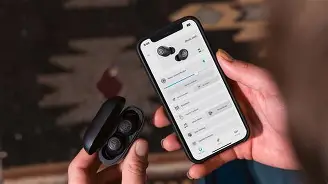
Noise handling and microphones: With ANC engaged, these earbuds reduce steady background noise—airplane hum, bus noise, office chatter—making music, podcasts, and voice calls easier to follow in noisy settings. Microphone performance on similarly positioned earbuds generally handles calls well in quiet and average-noise environments, but performance can vary in strong wind or very loud outdoor conditions.
Portability and battery: True wireless earbuds are battery-powered and optimized for hours of single-charge playback with additional charges available from the carrying case. This makes them ideal for commuting, gym sessions, and travel. Controls are typically touch or physical press, which suit on-the-go adjustments.
Real-world use cases: The Jbuds Pods ANC are best for commuters who want quiet during a flight or subway ride, for remote workers taking frequent calls from different rooms, and for people who value private listening while traveling or exercising.
Sharp 312 Soundbar — What it is good at
The Sharp 312 soundbar is a compact home audio solution intended primarily to improve television sound without the space and complexity of a full surround system. Soundbars in this class emphasize dialogue clarity, a wider front soundstage than TV speakers, and simplified installation.
Purpose and placement: A soundbar is a room-based audio device. It sits under or in front of the television and is typically powered from mains electricity. It can be paired with a TV over optical or HDMI ARC/eARC, and many models also support Bluetooth for mobile streaming. Because it uses external power, the soundbar can deliver greater sustained levels and bass extension than battery-powered earbuds.
Looking for the best Audio & Headphones deals on Amazon?
Browse Now →Audio character and content: The primary advantage of a soundbar is its ability to render TV dialogue, effects, and the low-frequency impact of movie soundtracks more convincingly in a shared space. For music, a soundbar can be enjoyable for casual listening and party background, though it won't necessarily replace a good stereo or dedicated hi-fi setup.
Real-world use cases: The Sharp 312 suits living rooms and bedrooms where multiple listeners want better TV sound, for people who host movie nights, and for gamers who prioritize improved spatial cues and lower latency when connected properly to a console or TV.
Head-to-head comparison
| Feature | JLab Jbuds Pods ANC | Sharp 312 Soundbar |
|---|---|---|
| Product type | True wireless in-ear earbuds with onboard ANC | Compact powered soundbar for TVs and rooms |
| Best for | Personal listening, commuting, workouts, phone calls | Shared TV watching, movies, casual music in room |
| Active Noise Cancellation | Yes — reduces surrounding ambient noise for the wearer | No — room device, not designed for ANC; passive room treatment required |
| Portability | High — pocketable case and battery-powered | Low — requires mains power and fixed placement |
| Primary connections | Bluetooth to phones, tablets, laptops | HDMI ARC/optical for TV, plus Bluetooth streaming |
| Audio focus | Close-field, intimate presentation, emphasized vocals/bass | Room-filling stereo/enhanced center emphasis for dialogue |
| Stereo imaging | Excellent for headphone staging and narrow soundstage | Wider front soundstage but less immersive than multi-speaker surrounds |
| Dialogue clarity | Clear—because sound is directly to ear canal | Improved vs TV speakers—engineered for speech intelligibility |
| Bass impact | Good at short distances; limited by driver size and seal | Stronger low-end presence and physical impact for rooms (especially with subwoofer) |
| Call/microphone quality | Designed for calls—built-in mics and voice pickup | Not intended for personal calls; may support Bluetooth hands-free but not ideal |
| Power source | Battery-powered (earbuds + charging case) | Mains-powered (AC supply) |
| Typical battery life | Hours per charge with case providing additional top-ups | Not battery-powered—runs while plugged in |
| Ease of setup | Pair via Bluetooth to one device quickly | Requires connection to TV (optical or HDMI ARC) and placement |
| Price tier | Personal-audio price range; often entry to mid-level | Entry-level to mid-range home audio |
Deep dive: What each device actually brings to everyday life
Beyond specs, the question buyers ask is practical: will the upgrade change the way they enjoy audio day-to-day? The answer depends on use patterns.
For commuters and travelers who spend most listening time in public transit or noise-filled offices, earbuds with ANC will feel like a dramatic improvement. ANC reduces continuous low-frequency noise and—paired with a good tip seal—makes voices and music clearer at lower volumes. That also reduces listening fatigue over long periods and preserves hearing.
By contrast, for someone whose main frustration is flat, tinny TV audio in a living room, a soundbar is often the single most cost-effective upgrade. It improves dialogue clarity, makes explosions and sound effects more satisfying, and anchors content in the room. A soundbar also benefits shared listening—multiple people can enjoy improved audio at the same time without headphones.
When considering gaming, latency matters. Dedicated gaming headsets or wired headphones tend to offer the lowest delay. Many modern soundbars and gaming setups can be optimized to reduce audio lag (through HDMI ARC/eARC or game modes), whereas Bluetooth earbuds may introduce variable latency depending on codec and source device. For competitive gamers, that can be a decisive factor.
Pros & Cons
JLab Jbuds Pods ANC
- Pros: Highly portable; effective ANC for personal environments; good for hands-free calls and on-the-go use; isolated listening at low volumes helps concentration and commuting comfort; simple Bluetooth pairing and compact charging case.
- Cons: Small drivers cannot match room-filling sound and physical bass of powered speakers; battery must be recharged; less suitable for shared listening; ANC and sound quality can degrade in windy or extremely noisy outdoor situations.
Sharp 312 Soundbar
- Pros: Substantial improvement over built-in TV speakers for dialogue and effects; better bass and dynamic range for movies and music in a room; simple single-unit upgrade that integrates with TV; suitable for multiple listeners and casual home theater setups.
- Cons: Not portable and requires mains power; it won’t offer personal ANC or private listening; the soundstage is limited compared with a full surround system; some compact soundbars still lack deep bass without an external subwoofer.
Buying guide — what buyers should prioritize
Deciding whether to upgrade to a soundbar, switch earbuds, or hold off depends on a few targeted checks. Below is a practical checklist buyers can use before pressing “buy.”
- Identify the primary listening scenario. If most listening is solo and mobile—commuting, running, or in-office—the earbuds are the logical focus. If the main use is TV, movies, or music for multiple listeners at home, the soundbar answers that need.
- Room size and placement. Small rooms benefit from compact soundbars; larger rooms may need a more powerful soundbar or an additional subwoofer to feel enveloping.
- Connectivity with existing devices. Confirm the TV or source has the right ports (HDMI ARC/eARC or optical) for the soundbar. For earbuds, check the phone or laptop supports the Bluetooth codec and multipoint pairing the buyer needs.
- Latency requirements. Gamers should prioritize low-latency pathways—prefer HDMI for soundbars and low-latency Bluetooth codecs for earbuds or use wired headphones for strict timing.
- Noise environment and ANC importance. If noise cancellation is a priority, earbuds with effective ANC are more valuable than a soundbar, which cannot cancel personal noise.
- Battery and power considerations. Earbuds require frequent charging cycles; soundbars stay powered but consume mains energy. Consider lifestyle and tolerance for daily charging.
- Test listening and return policy. Wherever possible, audition both product types with familiar content. Ensure the seller’s return window allows real-world testing at home.
- Feature extras and ecosystem. EQ, companion apps, firmware updates, and compatibility with voice assistants can influence long-term satisfaction.
Practical upgrade scenarios — when it makes sense
Scenario A: The commuter with weak TV audio at home. If the commuter already uses earbuds daily and the TV sounds disappointing, adding a soundbar is a legitimate upgrade because it improves home viewing experiences without replacing the earbuds' portability.
Scenario B: The solo listener who wants better music fidelity on the move. Upgrading to higher-quality true wireless earbuds or one with better ANC and codec support directly improves the listener’s primary use case. A soundbar won’t help while walking or commuting.
Looking for the best Audio & Headphones deals on Amazon?
Browse Now →Scenario C: Shared household that watches movies together. Here, a soundbar is worth prioritizing—especially if the TV’s dialogue is unclear or the bass is uninspiring. Small soundbars deliver clear value versus built-in speakers and are far less intrusive than a full speaker system.
Scenario D: A mixed-use buyer on a tight budget. If the budget allows only one purchase and the buyer splits time evenly between commuting and home viewing, consider which pain points are more pressing. If quiet commute time is more valuable, buy earbuds; if home viewing is the frustration, buy a soundbar.

Final analysis — Is it worth upgrading?
The decision to upgrade from JLab Jbuds Pods ANC to a Sharp 312 soundbar (or vice versa) is not strictly linear because the two devices solve different problems. If the question is whether a soundbar is an upgrade over earbuds in absolute audio quality, it depends: for room-based, communal listening the soundbar provides a more impactful experience. For personal mobility, ANC earbuds provide a different kind of upgrade—silence and clarity on the go.
In other words, a soundbar is an upgrade for TV and shared listening. Earbuds are an upgrade for privacy, noise isolation, and portable convenience. Many households find that the two are complementary rather than mutually exclusive: earbuds for travel and concentrated listening, soundbar for the lounge and movie nights.
Budget-conscious buyers should prioritize the device that fixes their biggest daily pain point. If the TV sound is the recurring frustration, a soundbar will usually deliver immediate, noticeable improvement. If background noise is preventing concentration or enjoyment while out and about, better ANC earbuds will change that experience more meaningfully.
Conclusion
Comparing the JLab Jbuds Pods ANC and the Sharp 312 soundbar highlights an essential truth: “upgrade” must be defined by the listener’s context. For private, portable listening and noise control, ANC earbuds are the sensible upgrade. For shared, room-filling audio and improved TV dialogue and effects, a soundbar is where the upgrade payoff lies.
Rather than viewing the choice as strictly one versus the other, buyers should map their daily habits and problems. When improvement is needed in different domains—travel versus home entertainment—the smartest approach is often to combine both, using each device where it performs best. That way, the investment delivers the most practical benefit across all listening scenarios.