Which is Better Value? Wandrd Prvke V4 vs Leica Q3 Monochrom Compared
The intersection of premium photography equipment and elite carrying solutions often creates a paradox for the modern creative. On one hand, you have the Leica Q3 Monochrom, a camera that represents the pinnacle of specialized digital imaging, stripping away the distraction of color to focus purely on light, shadow, and texture. On the other hand, there is the Wandrd Prvke V4, a backpack that has redefined how photographers transport their gear through a blend of rugged durability and urban aesthetics. While one is a tool for creation and the other a vessel for protection, comparing their "value" requires a deep dive into the philosophy of ownership, the longevity of high-end gear, and the real-world utility each provides to a dedicated practitioner of the craft.
Value, in the context of professional-grade gear, is rarely defined by the lowest price point. Instead, it is measured by how effectively a product fulfills its intended purpose over a long horizon of time. Buying into the Leica ecosystem is a commitment to a specific workflow and a legacy of German engineering. Investing in Wandrd’s flagship series is a commitment to the safety of one's gear and the ergonomics of travel. This article examines these two heavyweights of the camera world to determine where a creator’s money is best spent when looking for meaningful returns on investment in their hobby or profession.
The Specialist’s Masterpiece: Leica Q3 Monochrom Analysis
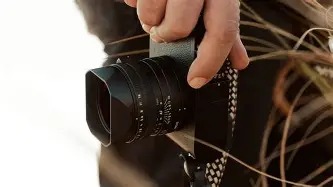
The Leica Q3 Monochrom is not merely a camera; it is a statement of intent. By removing the color filter array (CFA) from its 60.3-megapixel full-frame sensor, Leica has created a device that captures luminance data with a level of clarity and micro-contrast that is technically impossible for a standard Bayer-pattern sensor to replicate. Every pixel is dedicated to recording the intensity of light, resulting in images that possess a "filmic" quality, incredible dynamic range, and a noise floor that remains aesthetically pleasing even at high ISO settings.
The integration of the Summilux 28mm f/1.7 ASPH lens is perhaps the strongest argument for the Q3 Monochrom’s value. If one were to purchase a dedicated Leica M-mount Monochrom body and a 28mm Summilux lens separately, the cost would easily double. By housing this world-class optic in a fixed-lens body, Leica provides a relatively "affordable" entry point into the world of Monochrom photography. The V4 iteration of the Q series platform brings modern conveniences like tilt-screens, improved weather sealing, and lightning-fast autofocus, making it a viable tool for street photography, architectural documentation, and intimate portraiture.
However, the value of the Q3 Monochrom is limited by its extreme specialization. It cannot record color. For a wedding photographer or a commercial shooter, this makes it a secondary or tertiary tool rather than a primary workhorse. Its value lies in the hands of the artist who has moved beyond the need for "everything" and seeks the "best" version of one specific thing. The build quality involves magnesium die-cast frames and elegant leatherette, ensuring that while the electronics may eventually age, the physical object remains a piece of industrial art.
Pros and Cons of the Leica Q3 Monochrom
- Pro: Unrivaled tonal transition and sharpness due to the absence of a color filter array.
- Pro: Exceptional low-light performance with usable files even at ISO 50,000 and beyond.
- Pro: The 28mm Summilux lens is optically perfect and features a dedicated macro mode.
- Pro: IP52 weather resistance rating provides peace of mind in unpredictable environments.
- Pro: High-resolution electronic viewfinder (EVF) makes manual focusing a tactile joy.
- Con: Extremely high initial capital outlay compared to standard full-frame mirrorsless systems.
- Con: Fixed focal length limits versatility for sports, wildlife, or tight portraiture.
- Con: The niche nature of black-and-white-only sensors makes the transition from color workflows difficult.
The Modern Standard: Wandrd Prvke V4 Analysis
If the Leica represents the soul of the image, the Wandrd Prvke V4 represents the backbone of the photographer’s journey. Now in its fourth iteration, the Prvke series has matured into what many consider the "perfect" camera backpack. The V4 refinements focus on comfort, ease of access, and refined materials that bridge the gap between "tactical" gear and "lifestyle" accessories. Its value proposition is built on the concept of the "one bag solution." It is equally at home on a three-day hiking trip as it is in a boardroom or a crowded subway.
The core of the Prvke V4’s utility is its modularity. Through the use of removable camera cubes, the bag can transform from a dedicated photographic hauling system into a standard travel pack. The roll-top expansion allows for an extra 5 liters of space, which is critical for those who find themselves picking up extra gear or layers of clothing mid-shoot. For owners of a camera like the Leica Q3, the Prvke offers a specialized side-access portal, allowing the photographer to swing the bag around and grab their camera in seconds without ever putting the bag on the ground.
Shop the latest Cameras & Photography picks on Amazon.
Shop Amazon →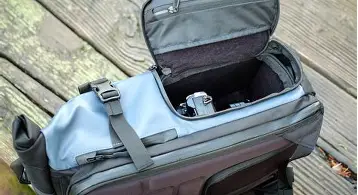
Durability is where the Prvke V4 earns its keep. Constructed from heavy-duty tarpaulin and 1680D ballistic nylon, the bag is designed to be thrown into plane overhead bins, dragged through dirt, and exposed to rain. Throughout several years of heavy use, these materials tend to hold their shape and protective qualities far better than traditional canvas or lightweight polyester bags. When you calculate the cost of the bag against the thousands of dollars of equipment it protects, the value becomes evident. It is an insurance policy you wear on your back.
Pros and Cons of the Wandrd Prvke V4
- Pro: Incredible versatility with the roll-top design and modular camera cube system.
- Pro: Rugged, water-resistant materials that can withstand years of professional abuse.
- Pro: Quick side access is perfectly positioned for compact and rangefinder-style cameras.
- Pro: Improved back panel ventilation and shoulder strap padding in the V4 update.
- Pro: Hidden passport/wallet pocket offers security during international travel.
- Con: The tarpaulin material can be stiff in cold weather and shows "scuff" marks easily.
- Con: The bag itself is relatively heavy even when empty due to the robust materials.
- Con: Requires the additional purchase of "bundles" to get the full functionality of the camera cube and accessory straps.
Side-by-Side: Technical and Functional Comparison
Comparing a camera to a backpack requires looking at how they impact the photographer's efficiency and the total cost of ownership over time. One provides the "what" of photography, while the other provides the "how." In the table below, we look at how these two premium products occupy their respective niches.
| Feature Category | Leica Q3 Monochrom | Wandrd Prvke V4 (31L) |
|---|---|---|
| Primary Function | High-fidelity B&W image capture | Modular gear transport and protection |
| Engineering Focus | Optical perfection and sensor purity | Access, durability, and ergonomics |
| Longevity | 10+ years (Optics), 5-7 years (Digital) | Lifetime (Warranty/Materials) |
| Weather Protection | IP52 Weather Sealed | Water-resistant Tarpaulin/Nylon |
| User Base | Fine art and street specialists | Adventure and travel photographers |
| Cost-to-Utility Ratio | High (Specialized luxury) | Very High (Daily workhorse) |
Buying Guide: Which Investment is Right for You?
When deciding where to allocate a budget, a photographer must ask whether they are suffering from a "limitation of vision" or a "limitation of logistics." Understanding your current friction points is the key to determining which of these items offers better value for your specific situation.
Invest in the Leica Q3 Monochrom If...
You have reached a point in your photography where you find color distracting rather than additive. If your work focuses on form, lighting, and shadow, the Monochrom will provide a level of satisfaction that no software-converted color file can match. Furthermore, if you value a "minimalist" approach, the Q3 Monochrom replaces an entire kit of lenses and bodies with a single, elegant tool. Its value shines in its ability to force the photographer to see the world through a 28mm frame, simplifying the creative process while maximizing technical output. It is a legacy purchase—a tool that you will likely keep for a decade, even as newer models arrive, because the sensor's unique properties are timeless.
Invest in the Wandrd Prvke V4 If...
Your current gear is causing you physical discomfort or if your "fear" for your equipment's safety is preventing you from taking it to interesting locations. Many photographers own great cameras but leave them at home because they don't have a comfortable or secure way to carry them. The Prvke V4 solves this. Its value is found in the "marginal gains"—the 10 seconds saved by the side access, the lack of back pain after an 8-hour city walk, and the ability to pack a laptop, a tripod, and a jacket all in one unit. If you are a traveler who needs a bag that doesn't scream "expensive camera inside," the Prvke’s understated, urban aesthetic provides security through anonymity.
The "Total System" Perspective
Interestingly, the two products are not mutually exclusive; they actually represent a dream kit for many. The slim profile of the Leica Q3 Monochrom fits perfectly into the Wandrd Prvke's side-access pocket, even in the smaller 21L version of the bag. For a user who can afford both, the value is compounded: you have the ultimate B&W storytelling tool protected by the ultimate urban adventure pack. However, if forced to choose one as a "value" play, the Wandrd Prvke V4 wins on a strictly utilitarian basis because it improves the use of all your cameras, whereas the Leica only improves one specific type of output.
Find top-rated Cameras & Photography products at great prices.
See Deals →Real-World Use Cases and User Experience
To truly understand the value, we must look at how these products behave in the field. Imagine a street photographer in London during a light drizzle. The Leica Q3 Monochrom user is confident; they don't need to fear the raindrops because of the IP52 rating. They are focused on the way the wet pavement reflects the streetlights. They are shooting at ISO 12,800, capturing grain that looks like T-Max 400 film. The value here is creative freedom.
Now consider the same photographer at the end of the day, needing to jump on a train. They slide the Q3 into the side of their Prvke V4, pull the roll-top down to secure their extra sweater, and head into the crowd. The bag's straps distribute the weight so well they forget they are carrying a $6,000 camera. The value here is peace of mind and physical longevity. For the professional, the bag might actually be the "better" value because it enables the work to happen day after day without burnout or equipment failure.
Buyers typically care about three things: Performance, Durability, and Resale Value. The Leica excels in Performance and Resale Value; Monochrom cameras hold their price incredibly well on the used market because they are produced in smaller quantities and desired by collectors. The Wandrd excels in Durability and "Cost Per Use." If you use the Prvke V4 every day for five years, the cost breaks down to pennies per day. That is the definition of a high-value purchase.
Conclusion
Determining whether the Wandrd Prvke V4 or the Leica Q3 Monochrom offers "better value" depends entirely on what you currently lack in your creative arsenal. The Leica Q3 Monochrom is an aspirational, high-performance instrument that delivers a unique aesthetic that cannot be easily replicated. Its value is reflected in the purity of the files and the prestige of the lens. It is an investment in the quality of the result.
Conversely, the Wandrd Prvke V4 is a practical, impeccably designed utility that improves the quality of the process. It protects your existing investments, expands your carrying capacity, and adapts to your lifestyle. While it lacks the glitz of a German-made sensor, its impact on your daily life as a photographer is arguably more profound. For most enthusiasts and professionals, the Prvke V4 represents the better objective value simply because of its versatility and lower barrier to entry. However, for the artist who has found their voice in the nuances of grey, no backpack in the world can provide the value found in the click of a Leica Monochrom’s shutter.